
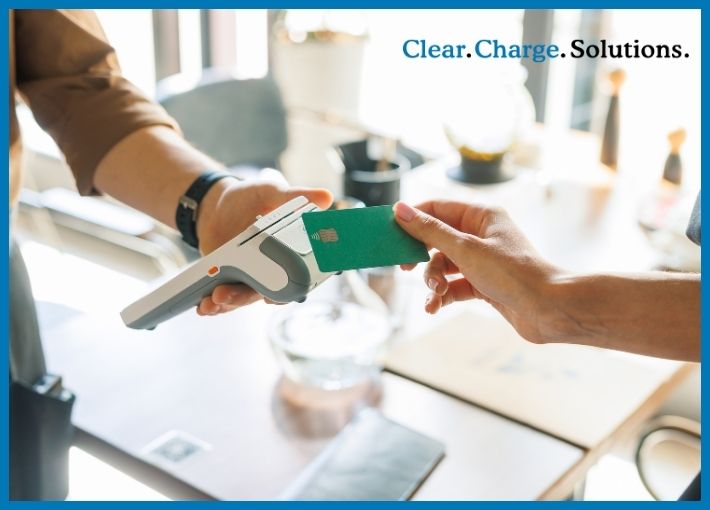
You’ve seen it at the gas station for years: one price for cash, another for card. Now it’s showing up at restaurants, salons, auto shops, and medical offices — a line on the receipt that says “3% card fee” or a sign at the register offering a discount for paying cash.
If you own a business, you’ve probably wondered two things. Is that actually allowed? And should I be doing it?
Short answers: usually yes, and quite possibly. But the details matter, and this is a topic where sloppy details get merchants in trouble. So let’s walk through it the way we’d explain it across the counter — no processor-speak, no fine print buried in paragraph nine.
First, the problem both programs solve
Every time a customer pays with a card, you give up a slice of the sale — typically somewhere between 2% and 4% once all the fees stack up. On $40,000 a month in card sales, that can easily run $1,000 or more. Every month. Forever.
For decades, merchants just ate that cost or baked it into prices, which means cash payers quietly subsidized card payers. Surcharging and cash discounting are two different ways of shifting that cost back to the people who choose to pay by card. They sound similar, but legally and practically they’re not the same — and mixing them up is the number one mistake we see.
Surcharging: adding a fee to card payments
A surcharge is an extra fee added on top of your posted price when a customer pays with a credit card. Your price is $100; the credit card payer sees $100 plus a card fee at checkout.
The rules that come with it, in plain English:
- Credit cards only. Card brand rules don’t allow surcharges on debit cards or prepaid cards — even when the customer runs a debit card “as credit.” Your system has to tell the difference automatically.
- There’s a cap. Under current card brand rules, surcharges are generally limited to a few percent — enough to cover your processing cost, not to turn a profit on the fee itself.
- You have to disclose it. Clear signage at the entrance and the register, plus the surcharge shown as its own line item on the receipt.
- State rules vary. Most states allow surcharging, but a small number still restrict or prohibit it, and some regulate exactly how it must be displayed. This is one of those areas where the rules genuinely change, so it pays to work with a processor that tracks them for you.
Done correctly, surcharging can bring your effective credit card processing cost close to zero. Done carelessly — surcharging a debit card, skipping the signage — it can mean fines, card brand penalties, and unhappy customers.
Cash discounting: rewarding the cash payer
A cash discount flips the math. Instead of adding a fee to card payments, you post prices that reflect the cost of card acceptance, then take money off for customers who pay with cash. Posted price $103; cash payers pay $100.
Why do many merchants like this route?
- It works on every card type. Because you’re discounting cash rather than surcharging credit, the debit-versus-credit distinction stops being a compliance headache.
- It’s available almost everywhere. Offering a discount for cash is broadly permitted across the country.
- It feels different to customers. Psychologically, “save 3% by paying cash” lands softer than “pay 3% more for using your card.” Same math, better conversation.
The catch: your posted prices have to genuinely be your card prices, with the discount applied for cash. Programs that post a low price and then sneak a “service fee” onto card transactions are really disguised surcharges, and regulators in several states have gone after exactly that setup. If a processor pitches you a “cash discount program” where the fee magically appears at the register, ask harder questions.
So which one fits your business?
There’s no universal answer, but here’s the framework we use with merchants every day:
- High-ticket, credit-heavy businesses — auto repair, medical, legal, B2B services — often lean toward compliant surcharging, because most transactions are true credit cards and the savings are substantial.
- High-volume, everyday businesses — restaurants, salons, convenience retail — often prefer dual pricing or cash discounting, because debit cards make up a big share of transactions and the customer experience stays friendly.
- Businesses in restrictive states usually go the cash discount route, properly structured.
The honest answer is that the right program depends on your card mix, your ticket size, your state, and your customers. That’s a fifteen-minute conversation, not a guess.
What a properly run program looks like
Every compliant program we set up has the same backbone: equipment that automatically identifies card type and applies the right pricing, signage that meets card brand and state requirements, receipts that itemize everything, and pricing that’s explained to your staff so they can answer the “what’s this fee?” question in one friendly sentence.
Customers don’t push back on fees they understand — they push back on surprises.
Frequently Asked Questions
Is it legal to charge customers a fee for using a credit card?
In most U.S. states, yes — as long as you follow card brand rules: credit cards only, capped at your cost of acceptance, clearly disclosed with signage, and itemized on the receipt. A few states still restrict or prohibit the practice, so confirm your state’s current rules before starting.
What’s the difference between a surcharge and a cash discount?
A surcharge adds a fee on top of your posted price for credit card payments. A cash discount posts card-inclusive prices and takes money off for cash payers. They can produce similar savings, but they’re regulated differently — and the cash discount model works on debit cards, while surcharging doesn’t.
Can I surcharge debit card transactions?
No. Card brand rules prohibit surcharging debit and prepaid cards, even when the card is processed as a credit transaction without a PIN. A compliant setup detects the card type automatically and only applies the surcharge to true credit cards.
Will I lose customers if I add a card fee?
Most merchants find that clear communication is the deciding factor. When the fee is disclosed up front, capped at a reasonable rate, and customers have a free way to pay (cash or debit under a surcharge program), pushback tends to be minimal — especially now that these programs are common everywhere.
Keep more of every sale
If processing fees are eating a hole in your margins, a compliant surcharge or cash discount program can close it — usually in a matter of days, with equipment that handles the rules for you.
**Start your online application with Clear Charge Solutions** and see what you’d save.
Questions first? Call 406-605-5056 or email Info@ClearChargeSolutions.com.
Follow Clear Charge Solutions on Instagram @clearchargesolutions for straight talk on payments.